

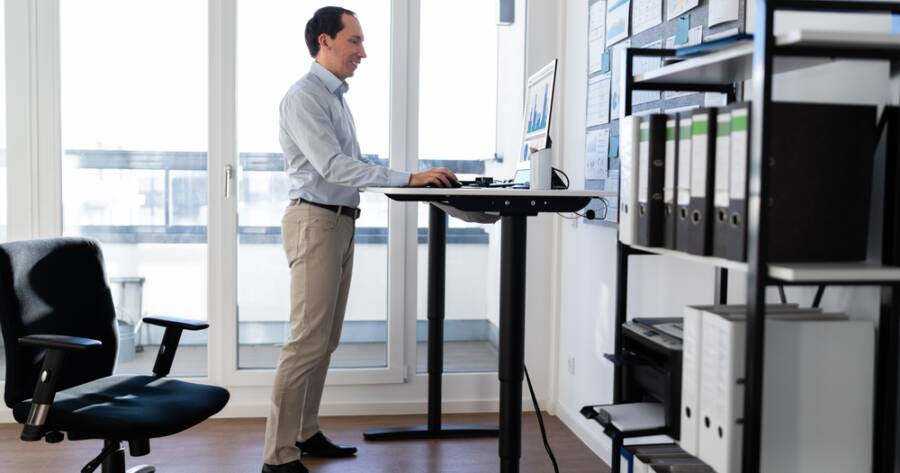
Standing desks have become popular in home offices and workplaces across the United States. Many people switch to standing because they hope it will reduce back pain caused by long hours of sitting. While standing can help, simply raising your desk is not enough. Without proper setup and movement habits, you may still experience discomfort. The key is to use your standing desk correctly. Understanding key strategies can help reduce back pain and improve daily comfort.
1) Set the Desk and Monitor at the Correct Height
One of the most common mistakes with standing desks is poor height adjustment. If your desk is too high, your shoulders may lift and create tension in your upper back. If it is too low, you may hunch forward and strain your lower back.
When standing, your elbows should rest at about a 90-degree angle while typing. Your wrists should stay straight, not bent upward. The top of your monitor should be at or slightly below eye level. This allows you to look forward without tilting your head down. Keep the screen about an arm’s length away from your face.
If you use a laptop, consider a laptop stand and external keyboard. This setup helps you position the screen and keyboard at proper heights instead of compromising your posture. Small adjustments can make a noticeable difference in reducing strain over time.
2) Alternate Between Sitting and Standing
Standing all day is not the solution to back pain. In fact, staying in one position for too long, whether sitting or standing, can increase stiffness. A better approach is to alternate between the two.
Start by standing for 20 to 30 minutes at a time, then return to sitting. Over the course of the day, switch positions every 30 to 60 minutes. This movement keeps your muscles engaged without overloading them. Some desks have programmable height settings, which makes switching easier.
Listen to your body. If your lower back begins to feel tired, sit down and reset your posture. If your hips feel tight from sitting, stand up and stretch briefly. The goal is steady movement throughout the day, not staying in one position.
3) Improve Foot Support and Weight Distribution
Your feet and legs play a major role in how your back feels while standing. Hard floors can place pressure on your joints and lead to discomfort that travels up to your lower back.
Using an anti-fatigue mat can help cushion your feet and reduce strain. These mats provide a softer surface that encourages subtle movement in your legs. Even small shifts in balance can prevent stiffness.
Avoid locking your knees while standing. Keep a slight bend in your knees and shift your weight from one foot to the other every few minutes. You can also place one foot on a small footrest or low box for short periods. Changing leg position helps reduce pressure on your lower back.
4) Engage Your Core and Maintain Neutral Posture
Good posture while standing involves more than just keeping your back straight. Your core muscles help support your spine. When standing at your desk, gently tighten your abdominal muscles as if preparing for light activity. This should feel natural, not forced.
Keep your shoulders relaxed and pulled slightly back. Avoid leaning forward toward the screen. If you find yourself reaching for the keyboard, move it closer instead of bending your body. Your head should stay aligned over your shoulders, not pushed forward.
If possible, add brief mobility breaks during the day. Simple movements like shoulder rolls, gentle back extensions, and light stretches can help maintain flexibility. Even a one-minute walk around the room can improve circulation and reduce muscle tension.
5) Add Movement Beyond the Desk
While standing desks are helpful, they work best when combined with overall movement. Take short walking breaks throughout the day. If you work from home, step outside for fresh air when possible. In an office setting, walk to speak with a coworker instead of sending a message.
Consider light exercises such as bodyweight squats or calf raises during breaks. These movements keep muscles active and reduce stiffness. Staying active outside work hours also supports back health. Activities like walking, swimming, or gentle strength training help build the muscles that protect your spine.
Use Your Standing Desk With Intention
A standing desk can be a valuable tool for reducing back pain, but it must be used thoughtfully. Set your desk and monitor at the correct height, alternate between sitting and standing, support your feet, and maintain strong posture.
Add regular movement throughout the day to prevent stiffness. When you combine proper setup with consistent habits, your standing desk becomes more than furniture. It becomes part of a healthier work routine that supports your back and overall comfort.